

The Investment Mindset: Durable Everyday Products That Will Save You Money in the Long Run

The Investment Mindset: Durable Everyday Products That Will Save You Money in the Long Run

In a world driven by “fast consumption,” we are conditioned to believe that lower upfront costs equate to better financial decisions. We buy plastic kitchen tools, particleboard furniture, and disposable electronics, only to replace them within a few years. This cycle is a “false economy.” A $20 item that must be replaced annually is significantly more expensive than a $100 item that lasts for a decade. By shifting our perspective to cost-per-use, we can break the cycle of disposable consumption and build a life around items that pay for themselves through sheer longevity.

The Material Science of Durability

To stop wasting money on low-quality goods, you must learn to identify the physical characteristics of durability. When shopping, prioritize these “Green Flags”:

  • Metals: Cast iron, stainless steel, and brass are the gold standards. They withstand heat, impact, and wear.
  • Textiles: Look for natural, high-density fibers like full-grain leather, heavy-weight wool,

The Investment Mindset: Durable Everyday Products That Will Save You Money in the Long Run Read More
The Role of Smart Grid Technology in Modernizing Public Utility Infrastructure

The Role of Smart Grid Technology in Modernizing Public Utility Infrastructure

For over a century, the power grid functioned as a unidirectional, centralized system: power was generated at massive plants, flowed through transmission lines, and reached consumers. Today, this legacy model is straining under the weight of climate change, the rapid adoption of renewable energy, and the electrification of the economy. To meet these challenges, public utility infrastructure is undergoing a fundamental transformation through the deployment of smart grid technology.

The smart grid is no longer a futuristic concept; it is the essential digital backbone of modern civilization, serving as the bridge between aging physical assets and the demands of a decarbonized, data-driven future.

Core Components of a Smart Grid

A smart grid is defined by the integration of digital intelligence into every facet of the power delivery system. This transition relies on three primary technological pillars:

  • Advanced Metering Infrastructure (AMI): Unlike traditional “dumb” meters that only record consumption, AMI provides
The Role of Smart Grid Technology in Modernizing Public Utility Infrastructure Read More
Smart Shopper Strategies: How to Identify High-Quality Store Brand Alternatives

Smart Shopper Strategies: How to Identify High-Quality Store Brand Alternatives

In the modern retail landscape, the choice between a name-brand product and a store brand has evolved from a simple budget calculation into an exercise in consumer intelligence. The “Quality Gap Myth”—the belief that store brands are inherently inferior—has been dismantled by retailers who now treat their private labels as a cornerstone of their brand identity. For the analytical shopper, the goal is no longer to guess which products might be good, but to use a systematic, data-driven approach to identify the highest-quality alternatives on the shelf.

The Supply Chain Detective

To identify premium store-brand alternatives, you must think like a supply chain analyst. Most large retailers do not manufacture their own goods; they contract with co-packers. You can often uncover these partnerships by looking at the “Distributed By” or “Manufactured For” lines on the product packaging.

If you recognize a manufacturer or a facility location that also produces premium …

Smart Shopper Strategies: How to Identify High-Quality Store Brand Alternatives Read More
Smart Swaps: Best Generic Brand Products That Are Just as Good as Name Brands

Smart Swaps: Best Generic Brand Products That Are Just as Good as Name Brands

In today’s economic climate, the old stigma surrounding “generic” or store-brand products is rapidly vanishing. For decades, consumers believed that a lower price tag automatically signaled inferior quality. However, the retail landscape has shifted dramatically. Today, private-label products are often manufactured in the same facilities—sometimes even on the same production lines—as their high-priced name-brand counterparts.

For the value-conscious shopper, moving toward store brands is not a sacrifice; it is a financial upgrade. By understanding which items consistently deliver the same quality as national brands, you can significantly reduce your household expenses without lowering your standard of living.

The “Why” Behind the Savings

It is a common misconception that name-brand products cost more because they use “premium” ingredients. In reality, a significant portion of the markup on name-brand items covers massive national advertising campaigns, celebrity endorsements, and complex distribution legacy costs.

When you purchase a store brand, you are paying for …

Smart Swaps: Best Generic Brand Products That Are Just as Good as Name Brands Read More
How to Calculate ROI on Major Capital Items and Manufacturing Equipment

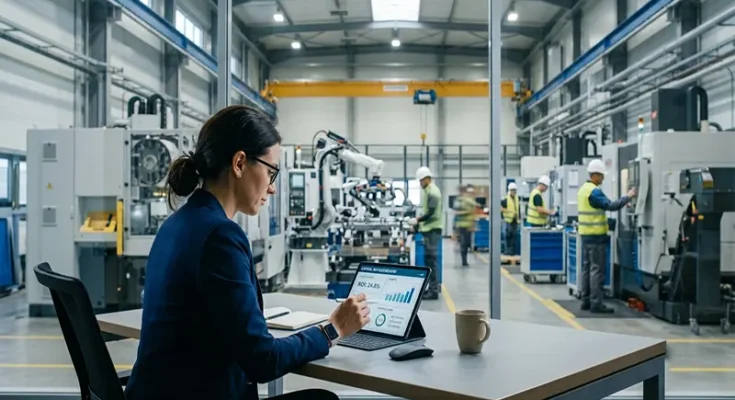
How to Calculate ROI on Major Capital Items and Manufacturing Equipment

In the era of Industry 4.0, capital expenditure (CapEx) decisions regarding major manufacturing equipment are no longer simple cost-benefit analyses. As machinery becomes more integrated with digital workflows and predictive maintenance systems, the financial justification must account for complex operational impacts. For CFOs and operations leaders, relying on a basic payback period is often insufficient; a rigorous Return on Investment (ROI) analysis is required to safeguard long-term profitability.

The Core ROI Calculation

At its most fundamental level, ROI provides a percentage-based view of an investment’s efficiency. While the formula is straightforward, the accuracy of your input data determines the reliability of your decision.

$$\text{ROI} = \left( \frac{\text{Net Gain from Investment} – \text{Cost of Investment}}{\text{Cost of Investment}} \right) \times 100$$

To achieve a true ROI, you must calculate the Net Gain as the total lifetime savings or profit generated by the new equipment, minus the Total Cost of Ownership (TCO).…

How to Calculate ROI on Major Capital Items and Manufacturing Equipment Read More