

Label Literacy: How to Read Nutrition Labels Like a Pro to Spot Hidden Sugars and Artificial Additives

Label Literacy: How to Read Nutrition Labels Like a Pro to Spot Hidden Sugars and Artificial Additives

In the modern grocery store, you are being sold a story before you even pick up a package. Bright colors, claims of “all-natural,” and promises of “heart health” are designed to capture your attention and bypass your critical thinking. However, the true story of what you are putting into your body is not found on the front of the package—it is found in the fine print on the back.

Learning to read nutrition labels like a pro is the single most effective way to reclaim your health autonomy. By moving past the marketing and decoding the Nutrition Facts panel and the ingredient list, you can cut through the “health halo” and make objective decisions about your food.

The Anatomy of a Label

To navigate the grocery aisle successfully, you must understand the two primary components of every label: the Nutrition Facts panel and the ingredient list.


1. The Serving Size

Label Literacy: How to Read Nutrition Labels Like a Pro to Spot Hidden Sugars and Artificial Additives Read More
The AI Kitchen: How to Use AI Assistants for Backwards Meal Planning and Grocery Shopping

The AI Kitchen: How to Use AI Assistants for Backwards Meal Planning and Grocery Shopping

For most households, the “dinner dilemma” follows a tedious path: browse recipe blogs, make a list, go to the store, and hope you actually use what you bought. Often, the result is a half-empty bag of wilted spinach and a grocery bill that reflects poor planning.

“Backwards meal planning” flips this traditional script. Instead of starting with an abstract idea of what you want to eat, you start with the physical reality of what you have (your current inventory) or your specific biological requirements (your nutritional goals). By using AI assistants as your culinary logistics coordinator, you can eliminate decision fatigue, slash food waste, and reclaim your kitchen.

The “Pantry-First” AI Workflow

The most effective way to fight food waste is to treat your kitchen like an inventory management system. AI excels here because it can cross-reference your “dangling ingredients” against millions of potential flavor combinations in milliseconds.

Prompting for

The AI Kitchen: How to Use AI Assistants for Backwards Meal Planning and Grocery Shopping Read More
How to Manage Supply Chain Risks for Critical Infrastructure Capital Procurement

How to Manage Supply Chain Risks for Critical Infrastructure Capital Procurement

In the realm of critical infrastructure—spanning power grids, heavy manufacturing, and transportation networks—capital procurement is a high-stakes discipline. Unlike standard commercial purchasing, capital procurement for infrastructure involves long lead times, specialized engineering requirements, and assets that are designed to operate for decades. When the supply chain for these critical components falters, the resulting downtime is not merely an inconvenience; it is a systemic failure that can impact public safety, economic stability, and national security.

Managing these risks requires moving beyond traditional procurement models toward a framework of Resilient Procurement.

The Anatomy of Infrastructure Risk

To manage risk, one must first categorize it. Critical infrastructure procurement is uniquely vulnerable to three primary vectors:

  • Geopolitical and Macroeconomic Instability: Infrastructure projects are often reliant on raw materials (such as lithium, copper, or steel) that are concentrated in specific regions. Trade tariffs, regional conflicts, or port congestion can turn a stable supply chain
How to Manage Supply Chain Risks for Critical Infrastructure Capital Procurement Read More
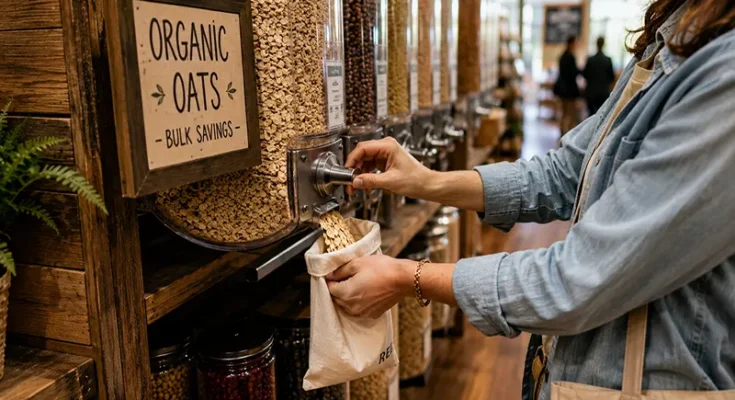
The Organic Grocery Strategy: How to Eat Well on a Tight Budget

The Organic Grocery Strategy: How to Eat Well on a Tight Budget

For many health-conscious consumers, the transition to an organic diet feels like a choice between their physical well-being and their financial security. The “Organic Price Premium” is a real barrier, but it is also frequently misunderstood. Eating organic on a tight budget isn’t about buying every item in the store with an organic label; it’s about shifting from an “all-or-nothing” mindset to an intentional, strategic purchasing system.

By leveraging data-backed prioritization, seasonal sourcing, and smart pantry management, you can significantly increase the quality of your diet without ballooning your monthly grocery bill.

The “Impact Over Perfection” Framework

The most effective way to manage an organic budget is to stop treating all produce as equal. You don’t need to buy organic everything to make a meaningful impact on your exposure to pesticides.

Prioritize the “Dirty Dozen”

The Environmental Working Group (EWG) annually publishes the “Dirty Dozen”—a list of produce consistently found …

The Organic Grocery Strategy: How to Eat Well on a Tight Budget Read More