
The Green ROI: Eco-Friendly Reusable Products That Pay for Themselves (And Shrink Your Waste)

The Green ROI: Eco-Friendly Reusable Products That Pay for Themselves (And Shrink Your Waste)

There is a persistent myth that living sustainably is a luxury—a lifestyle reserved for those with the budget to pay a “green premium.” In reality, the opposite is often true. Much of our modern waste is the result of a “disposable economy” where we pay for the same convenience over and over again, thousands of times a year.

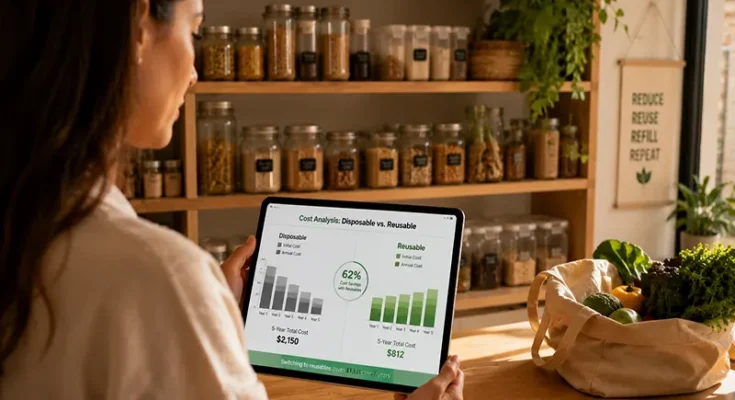
True sustainability is often rooted in personal finance. When you move from a disposable model to a reusable one, you aren’t just reducing your environmental footprint; you are making a high-yield investment. The goal is to reach your “Break-Even Point”—the moment a reusable product has saved enough money to cover its initial cost, after which every use puts money back into your pocket.

The High-ROI Hall of Fame

To maximize your returns, focus on products that replace high-frequency, “single-use” purchases. Here are the swaps that offer the most significant financial return.…

The Green ROI: Eco-Friendly Reusable Products That Pay for Themselves (And Shrink Your Waste) Read More


The Zero-Waste Grocery Strategy: Healthy Hacks to Save Money and Shrink Your Trash

The Zero-Waste Grocery Strategy: Healthy Hacks to Save Money and Shrink Your Trash

The average household throws away hundreds of dollars worth of perfectly edible food every year. This “Cycle of Waste” usually begins with the best of intentions: we buy fresh produce and healthy proteins, but poor planning and improper storage turn our groceries into expensive garbage by the end of the week.

Reducing food waste isn’t just an environmental imperative; it is a powerful financial strategy. By shifting your grocery habits from “reactive shopping” to “systematic inventory management,” you can stretch your budget further while ensuring that the food you buy actually makes it to your plate.

1. The “Pre-Shopping” Logic: The Audit

The biggest mistake shoppers make is going to the store without knowing what is already in their kitchen.

  • The 5-Minute Audit: Before you leave, take two minutes to snap a photo of the inside of your fridge and your pantry. This prevents the “duplicate purchase” syndrome—buying more broccoli
The Zero-Waste Grocery Strategy: Healthy Hacks to Save Money and Shrink Your Trash Read More
The Anti-Impulse Manifesto: Psychological Strategies to Stop Online Shopping Habits Permanently

The Anti-Impulse Manifesto: Psychological Strategies to Stop Online Shopping Habits Permanently

In the digital age, your phone is not just a communication device—it is a sophisticated, 24/7 retail terminal. Modern e-commerce is engineered to bypass your logic and target your biology. Through “one-click” checkout, algorithmic recommendations, and social proof, retailers exploit our prehistoric dopamine-driven reward systems.

Breaking the cycle of impulse buying is not a matter of “willpower”; it is a matter of architectural strategy. To stop impulse buying permanently, you must understand the psychological loops you are caught in and deliberately build “circuit-breakers” into your digital environment.

The Psychology of the Impulse

To defeat the habit, you must first recognize the tactics being used against you:

  • The Dopamine Loop: When you see an item you like, your brain releases a hit of dopamine—the “anticipation” chemical. The purchase is the climax; the delivery is the minor reward. By the time the package arrives, the dopamine spike has faded, leaving you with
The Anti-Impulse Manifesto: Psychological Strategies to Stop Online Shopping Habits Permanently Read More
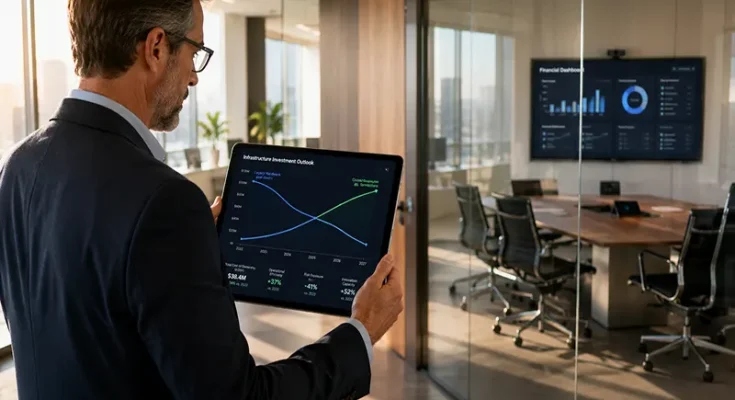
The Cloud Migration Pivot: Shifting from Physical Hardware Capital Expenditures (CapEx) to Infrastructure Operating Expenses (OpEx)

The Cloud Migration Pivot: Shifting from Physical Hardware Capital Expenditures (CapEx) to Infrastructure Operating Expenses (OpEx)

For decades, IT infrastructure was synonymous with tangible assets. CTOs and CFOs lived in the cycle of procurement: estimating three-to-five years of compute needs, securing massive budget allocations for server arrays and data center cooling, and then depreciating those assets over their useful life. This is the CapEx (Capital Expenditure) model.

Today, the industry is undergoing a fundamental financial evolution. As enterprises pivot toward cloud-native architectures, the core of IT spending is shifting from owning hardware to consuming infrastructure as a service (IaaS). This transition from CapEx to OpEx (Operating Expenditure) is not merely a change in accounting; it is a shift from rigid asset ownership to fluid, agile consumption.

The Case for CapEx (The Old Guard)

It is important to acknowledge why the CapEx model persisted for so long. For organizations with highly predictable workloads and stringent data sovereignty requirements, owning the iron offers:

  • Cost Predictability: Once the hardware
The Cloud Migration Pivot: Shifting from Physical Hardware Capital Expenditures (CapEx) to Infrastructure Operating Expenses (OpEx) Read More