

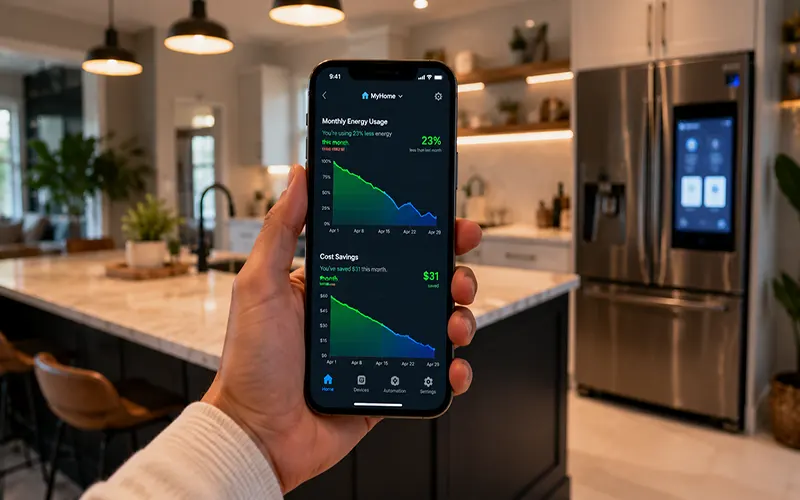
For many, the concept of a “smart home” conjures images of voice-activated lights or automated coffee makers. While these features provide convenience, they miss the most compelling reason to invest in smart technology: resource management.
Your home is an ecosystem of energy consumption, and in most cases, it is operating on autopilot—running systems when you aren’t home, keeping rooms illuminated unnecessarily, and bleeding power through standby devices. By transitioning to an intelligent home, you shift from passive consumption to proactive management. The devices listed below are not just gadgets; they are high-yield investments designed to cut your monthly utility bills by turning waste into efficiency.
The “Big Three” Energy-Drainers
To save money, you must identify where your utility bills go. In the typical household, three areas account for the vast majority of energy spending:
- HVAC (Heating, Ventilation, and Air Conditioning): Often 50% or more of your total energy bill.
- Lighting: A consistent, creeping cost, especially in larger homes.
- “Vampire” Electronics: Devices that consume electricity while in standby mode, such as TVs, game consoles, and chargers, which can account for up to 10% of your annual electricity costs.
The High-ROI Device Suite
Investing in smart home technology is a balancing act between upfront cost and long-term utility savings. Here are the devices that offer the clearest path to a return on investment (ROI).
1. The Smart Thermostat (The HVAC King)
This is the single most effective investment for any homeowner. Devices like the Nest Learning Thermostat or Ecobee use geofencing (detecting when your phone leaves the house) and adaptive learning to create schedules that prioritize efficiency. They stop your HVAC system from heating or cooling an empty house, which is the single largest source of household energy waste.
- The Savings: Most households see a 10% to 15% reduction in annual heating and cooling bills. Many smart thermostats pay for themselves within 18 months.
2. Smart Plugs and Power Strips
“Vampire power” is the energy consumed by devices that are turned “off” but still plugged in. A smart plug allows you to schedule your home office, gaming setup, or entertainment center to cut power completely when you go to bed or leave for work.
- The Savings: By automating the shutdown of non-essential electronics, you can shave a noticeable amount off your base-load electricity usage.
3. Smart Lighting Systems
Smart bulbs, motion sensors, and dimmers ensure that lights are only on when—and as bright as—they need to be. The real magic happens with motion-based automation: your hallway, garage, or laundry room lights turn off automatically seconds after you leave, eliminating the risk of leaving them on for hours.
- The Savings: Transitioning to LED smart bulbs alone drastically cuts lighting costs; adding motion sensors ensures that you are never paying for light you aren’t using.
4. Smart Water Monitors
Hidden leaks are silent bank-account drainers. Smart water monitors (like Flo by Moen) attach to your main water line and track flow rates in real-time. They can alert you to a running toilet or a leaky pipe long before you notice the impact on your water bill or suffer property damage.
- The Savings: Preventing a single major leak or addressing a long-term “silent” leak can save hundreds of dollars in water bills and potential repair costs.
The “Integration Effect”: The Power of Automation Scenes
The true value of a smart home isn’t found in a single device; it’s in the “Automation Scene.” By creating a single “Away Mode” automation, you can tell your home to:
- Lower the thermostat by 5 degrees.
- Cut power to the home office smart strip.
- Turn off all lights.
- Ensure all connected appliances are in energy-save mode.
This “set-it-and-forget-it” capability removes human error from the energy-saving equation. You no longer have to remember to turn everything off—the house does it for you.
Calculating Your Payback Period
To justify the purchase, calculate the payback period. If you spend $200 on a smart thermostat and it saves you $15 a month, your payback period is approximately 13 months. Everything saved after that date is pure profit, compounding month over month, year over year.
| Device | Estimated Payback | Primary Benefit |
| Smart Thermostat | 12–18 Months | HVAC efficiency & automation |
| Smart Plugs | 6–12 Months | Eliminates standby “vampire” power |
| Smart Lighting | 18–24 Months | Precision usage control |
| Water Monitors | Varies (High) | Leak prevention & total utility control |
Addressing Connectivity: The “Matter” Advantage
As you build your ecosystem, prioritize devices that support Matter. Matter is an industry-standard protocol that ensures your devices can communicate with each other regardless of the brand. Using Matter-enabled devices prevents “siloing,” ensuring your smart home remains manageable, scalable, and responsive for years to come.
Smart home energy management is the ultimate “set it and forget it” financial strategy. By deploying devices that intelligently manage your HVAC, kill vampire power, and monitor your utility usage, you are not just upgrading your home; you are investing in a lower cost of living. Start with a smart thermostat, automate your lighting, and watch as your monthly utility bills trend downward. In an era of rising energy costs, the smartest home is the one that knows how to save you money.