

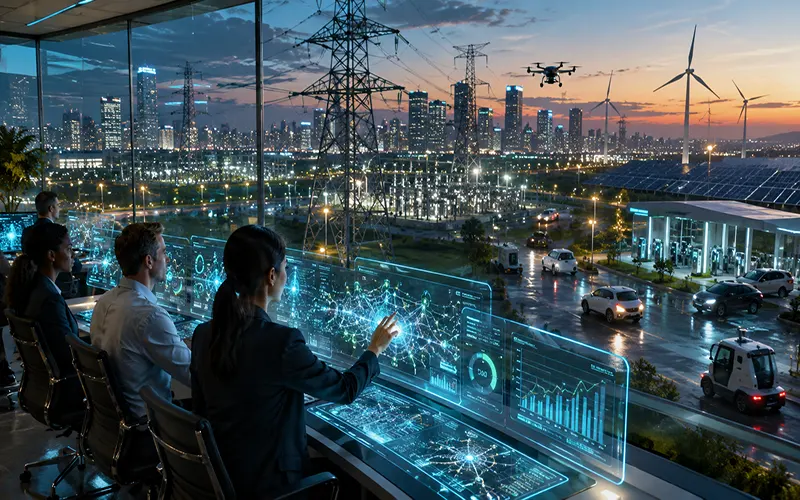
For over a century, the power grid functioned as a unidirectional, centralized system: power was generated at massive plants, flowed through transmission lines, and reached consumers. Today, this legacy model is straining under the weight of climate change, the rapid adoption of renewable energy, and the electrification of the economy. To meet these challenges, public utility infrastructure is undergoing a fundamental transformation through the deployment of smart grid technology.
The smart grid is no longer a futuristic concept; it is the essential digital backbone of modern civilization, serving as the bridge between aging physical assets and the demands of a decarbonized, data-driven future.
Core Components of a Smart Grid
A smart grid is defined by the integration of digital intelligence into every facet of the power delivery system. This transition relies on three primary technological pillars:
- Advanced Metering Infrastructure (AMI): Unlike traditional “dumb” meters that only record consumption, AMI provides two-way communication between the utility and the end-user. This enables real-time data collection, remote connectivity, and dynamic pricing models.
- Distribution Automation (DA): This involves the deployment of intelligent sensors and automated switching devices across the distribution network. DA allows the grid to act as a “self-healing” entity, capable of isolating faults and rerouting power without human intervention.
- Energy Management Systems (EMS): These platforms leverage big data to orchestrate the entire grid. By synthesizing data from sensors, weather patterns, and historical usage, EMS can optimize load balancing and anticipate maintenance needs before failures occur.
The Shift to Decentralization
Perhaps the most significant impact of smart grid technology is its ability to manage Distributed Energy Resources (DERs). As solar panels, battery storage, and microgrids become ubiquitous, the grid must shift from a “one-to-many” model to a “many-to-many” dynamic.
The smart grid facilitates the emergence of “prosumers”—individuals and businesses who both consume and produce energy. Through bidirectional metering and intelligent orchestration, smart grids allow these assets to contribute to grid stability rather than threatening it. By aggregating distributed resources, utilities can stabilize voltage and frequency even when intermittent sources like wind or solar are fluctuating.
Operational Resilience and Reliability
Traditional grids are inherently reactive; they rely on customers to report outages, after which crews are dispatched to manually locate and repair the fault. A smart grid is proactive and resilient:
- Automated Restoration: If a line goes down due to a storm, automated switching can reroute power to unaffected segments in milliseconds, significantly reducing the duration and scope of outages.
- Peak Shaving: By utilizing real-time data, utilities can implement demand-response programs. During peak hours, the grid can automatically adjust loads—such as industrial machinery or smart thermostats—to prevent brownouts.
- Predictive Maintenance: IoT sensors monitor equipment health (e.g., transformer temperatures or vibration levels). Utilities can transition from schedule-based maintenance to condition-based maintenance, fixing equipment only when it is actually at risk of failure.
Economic and Strategic Benefits
Modernization is a capital-intensive endeavor, but the long-term strategic advantages are profound:
- CapEx Efficiency: Smart grids allow utilities to “sweat their assets” more effectively. By optimizing existing infrastructure through data, companies can defer or avoid the massive costs of building new power plants or transmission lines.
- Operational Cost Reduction: Automation drastically lowers labor costs associated with manual meter reading and field inspections.
- Cybersecurity and Resilience: As the grid becomes more digital, it becomes a target. Modern smart grid deployment includes robust encryption, intrusion detection, and segment isolation, ensuring that the critical infrastructure is more secure than it was in its analog state.
Challenges to Adoption
Despite these benefits, the path to a fully modernized grid faces hurdles. Integrating legacy hardware with modern digital interfaces is a primary engineering challenge. Furthermore, funding these upgrades requires a delicate balance between ratepayer affordability and the necessity of investment. Regulatory environments must also evolve to incentivize efficiency over the traditional “cost-plus” model, and the industry must continue to address legitimate concerns regarding data privacy and the granular tracking of household energy use.
Future Outlook: The Intelligence Layer
The next phase of smart grid evolution will be driven by the convergence of Artificial Intelligence (AI) and edge computing. Currently, grids rely on centralized data centers to process information. Future smart grids will utilize “edge intelligence,” where individual transformers and sensors make instantaneous, autonomous decisions at the local level.
Combined with generative AI for predictive modeling, these technologies will allow utilities to create “digital twins” of the entire electrical infrastructure. This enables planners to run complex simulations of natural disasters or load spikes, ensuring that public utility infrastructure is not just functional, but optimized for the unpredictable challenges of the coming decades.
Executive Summary
The smart grid represents the necessary evolution of utility infrastructure. By transforming the network into a bidirectional, intelligent ecosystem, utilities can integrate renewable energy, enhance consumer reliability, and optimize operational expenditures. While significant regulatory and technical hurdles remain, the move toward an automated, self-healing grid is the only viable path to sustaining a modern, electrified society.