
The Circular Advantage: How to Maximize Trade-In Credits and Brand Rewards to Fuel Your Next Purchase

The Circular Advantage: How to Maximize Trade-In Credits and Brand Rewards to Fuel Your Next Purchase

For decades, the standard retail model was linear: you bought a product, used it until it broke or became obsolete, and then threw it away. This “buy-use-trash” cycle is not only environmentally unsustainable, but it is also a significant drain on your personal finances.

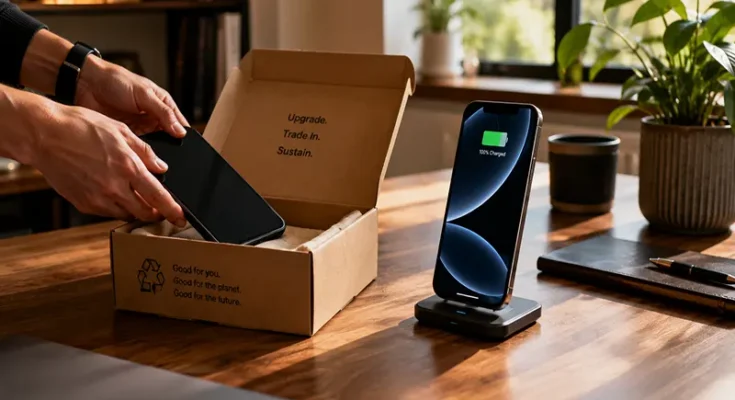
Today, we are witnessing the rise of Circular Commerce—a sophisticated model where products are designed for longevity, repair, and resale. For the savvy consumer, this isn’t just an environmental initiative; it is a powerful financial strategy. By treating your existing belongings as “assets” rather than “expendables,” you can turn your old gear into a consistent line of credit for your next upgrade.

The Anatomy of a Trade-In: Understanding Residual Value

A trade-in is not a favor you are doing for a brand; it is a financial transaction where you are liquidating an asset you own. To maximize this, you must first understand the two types …

The Circular Advantage: How to Maximize Trade-In Credits and Brand Rewards to Fuel Your Next Purchase Read More


The Future of Search: How to Optimize E-commerce Product Descriptions for AI-Assisted Commerce

The Future of Search: How to Optimize E-commerce Product Descriptions for AI-Assisted Commerce

The era of typing a keyword into a search bar and scrolling through a list of blue links is fading. We are entering the age of AI-Assisted Commerce, where consumers increasingly rely on large language models (LLMs) and intelligent shopping agents to do the heavy lifting of product discovery.

When a customer asks, “Find me a durable, breathable hiking jacket for a rainy weekend in the Pacific Northwest,” they aren’t expecting a list of search results. They are expecting a curated recommendation. If your product description isn’t optimized for this AI-driven interpretation, you effectively cease to exist in the digital marketplace.

The Semantic Shift: From Keywords to Context

Traditional SEO was built on “keyword stuffing”—sprinkling specific search terms throughout a page to trick an indexer. AI-assisted commerce renders this strategy obsolete. AI agents don’t “read” for keywords; they “parse” for semantic context.

To stay relevant, you must move …

The Future of Search: How to Optimize E-commerce Product Descriptions for AI-Assisted Commerce Read More
The Anti-Impulse Manifesto: Psychological Strategies to Stop Online Shopping Habits Permanently

The Anti-Impulse Manifesto: Psychological Strategies to Stop Online Shopping Habits Permanently

In the digital age, your phone is not just a communication device—it is a sophisticated, 24/7 retail terminal. Modern e-commerce is engineered to bypass your logic and target your biology. Through “one-click” checkout, algorithmic recommendations, and social proof, retailers exploit our prehistoric dopamine-driven reward systems.

Breaking the cycle of impulse buying is not a matter of “willpower”; it is a matter of architectural strategy. To stop impulse buying permanently, you must understand the psychological loops you are caught in and deliberately build “circuit-breakers” into your digital environment.

The Psychology of the Impulse

To defeat the habit, you must first recognize the tactics being used against you:

  • The Dopamine Loop: When you see an item you like, your brain releases a hit of dopamine—the “anticipation” chemical. The purchase is the climax; the delivery is the minor reward. By the time the package arrives, the dopamine spike has faded, leaving you with
The Anti-Impulse Manifesto: Psychological Strategies to Stop Online Shopping Habits Permanently Read More
The AI Kitchen: How to Use AI Assistants for Backwards Meal Planning and Grocery Shopping

The AI Kitchen: How to Use AI Assistants for Backwards Meal Planning and Grocery Shopping

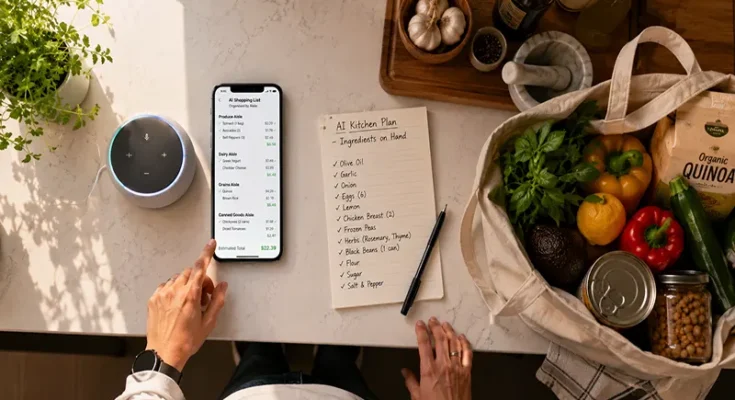
For most households, the “dinner dilemma” follows a tedious path: browse recipe blogs, make a list, go to the store, and hope you actually use what you bought. Often, the result is a half-empty bag of wilted spinach and a grocery bill that reflects poor planning.

“Backwards meal planning” flips this traditional script. Instead of starting with an abstract idea of what you want to eat, you start with the physical reality of what you have (your current inventory) or your specific biological requirements (your nutritional goals). By using AI assistants as your culinary logistics coordinator, you can eliminate decision fatigue, slash food waste, and reclaim your kitchen.

The “Pantry-First” AI Workflow

The most effective way to fight food waste is to treat your kitchen like an inventory management system. AI excels here because it can cross-reference your “dangling ingredients” against millions of potential flavor combinations in milliseconds.

Prompting for

The AI Kitchen: How to Use AI Assistants for Backwards Meal Planning and Grocery Shopping Read More
Smart Shopper Strategies: How to Identify High-Quality Store Brand Alternatives

Smart Shopper Strategies: How to Identify High-Quality Store Brand Alternatives

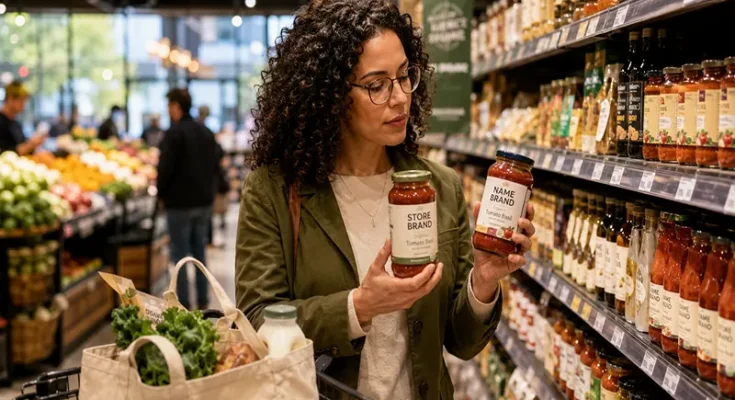
In the modern retail landscape, the choice between a name-brand product and a store brand has evolved from a simple budget calculation into an exercise in consumer intelligence. The “Quality Gap Myth”—the belief that store brands are inherently inferior—has been dismantled by retailers who now treat their private labels as a cornerstone of their brand identity. For the analytical shopper, the goal is no longer to guess which products might be good, but to use a systematic, data-driven approach to identify the highest-quality alternatives on the shelf.

The Supply Chain Detective

To identify premium store-brand alternatives, you must think like a supply chain analyst. Most large retailers do not manufacture their own goods; they contract with co-packers. You can often uncover these partnerships by looking at the “Distributed By” or “Manufactured For” lines on the product packaging.

If you recognize a manufacturer or a facility location that also produces premium …

Smart Shopper Strategies: How to Identify High-Quality Store Brand Alternatives Read More