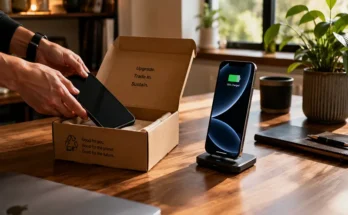


In the digital age, your phone is not just a communication device—it is a sophisticated, 24/7 retail terminal. Modern e-commerce is engineered to bypass your logic and target your biology. Through “one-click” checkout, algorithmic recommendations, and social proof, retailers exploit our prehistoric dopamine-driven reward systems.
Breaking the cycle of impulse buying is not a matter of “willpower”; it is a matter of architectural strategy. To stop impulse buying permanently, you must understand the psychological loops you are caught in and deliberately build “circuit-breakers” into your digital environment.
The Psychology of the Impulse
To defeat the habit, you must first recognize the tactics being used against you:
- The Dopamine Loop: When you see an item you like, your brain releases a hit of dopamine—the “anticipation” chemical. The purchase is the climax; the delivery is the minor reward. By the time the package arrives, the dopamine spike has faded, leaving you with a product you may not need and a feeling of buyer’s remorse.
- The Scarcity Fallacy: Retailers use “Only 2 left in stock” and countdown timers to trigger a fight-or-flight response. Your brain interprets this urgency as a survival situation, forcing you to act before your prefrontal cortex (the logic center) can intervene.
- The “Pain of Paying” Erasure: Evolutionarily, handing over physical cash activates pain centers in the brain. Digital payments—stored cards, Apple Pay, and “Buy Now, Pay Later” services—are designed to minimize this psychological friction, making spending feel abstract and consequence-free.
Psychological Circuit-Breakers
You can interrupt the impulse loop by forcing a shift from “System 1” (emotional, fast) to “System 2” (analytical, slow) thinking.
1. The 72-Hour Cooling-Off Period
Impulse is a temporary emotional state. By mandating a 72-hour wait for any non-essential purchase, you allow the dopamine wave to crest and fall. In 90% of cases, the intense desire to own the item will vanish by the third day, as your prefrontal cortex regains control.
2. The Cost-per-Use Calculation
When you see an item, force yourself to calculate its real cost. If you buy a $100 pair of shoes and wear them 50 times, they cost $2 per wear. If you buy a $50 “fast fashion” dress that you wear once, it costs $50 per wear. Shifting from the purchase price to the “cost-per-use” makes the value (or lack thereof) immediately apparent.
3. The Opportunity Cost Lens
Instead of asking, “Can I afford this?”, ask: “What else would I rather do with this money?” By visualizing the $100 spent on an impulse buy as a contribution toward a flight, an investment, or an experience, you reframe the decision as a trade-off rather than a vacuum.
Increasing Technological Friction
We are often impulse buyers because the path to purchase is too smooth. Intentionally break your shopping ease:
- Delete Saved Cards: Remove saved credit card information from your browsers and retail accounts. Requiring yourself to walk to another room to retrieve your wallet introduces a physical “friction” that provides enough time for your logic to kick in.
- Unsubscribe Aggressively: Marketing emails are emotional triggers delivered directly to your inbox. Use services like Unroll.me or manually unsubscribe from every brand newsletter. You cannot be tempted by a sale you never saw.
- Remove Shopping Apps: Delete apps like Amazon, Temu, or Shein from your home screen. Make the barrier to shopping a deliberate act rather than a default habit.
Identifying the Real Trigger
Impulse buying is rarely about the object; it is about the feeling. If you find yourself shopping when you are stressed, bored, or lonely, you are attempting to self-soothe.
Before hitting “Confirm Order,” perform a quick emotional check-in: “What is the feeling I am looking for right now?”
- If you are bored, do you need a new gadget, or do you need a new activity?
- If you want to feel “put together,” do you need a new outfit, or do you need to organize the clothes you already have?
Address the emotional need, and the impulse to buy will often disappear.
The Maintenance Phase: Building Intentionality
Transitioning to an “intentional” shopper means moving from a state of deprivation to a state of curation. Start a “Wait List” in your notes app. When you want something, add it to the list with the date. If, after 72 hours, you still want it and have the budget for it, you have permission to buy. This transforms shopping from a frantic, emotional reflex into a thoughtful, planned investment.
Regaining control over your wallet is a radical act of self-care. It isn’t about denying yourself nice things; it’s about reclaiming your focus and your financial future from algorithms that view you as nothing more than a conversion metric. By applying these circuit-breakers, you shift from being a passive target of retail strategy to an intentional architect of your own resources. You aren’t losing the ability to shop—you are finally gaining the power to choose.