

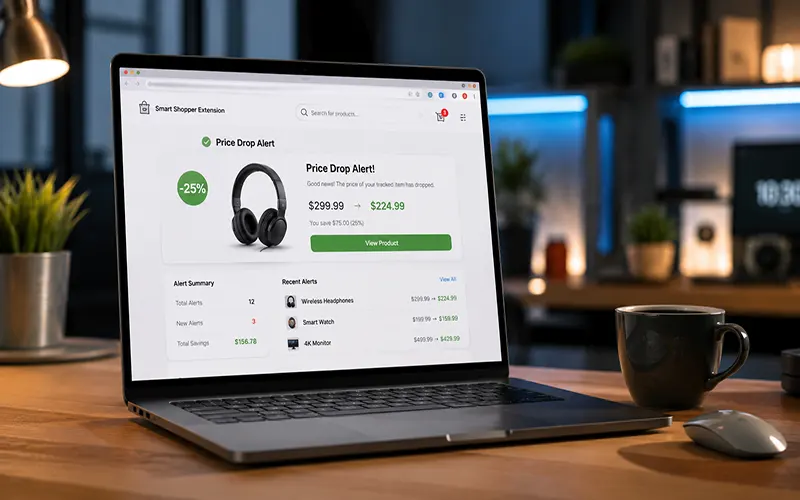
In the era of dynamic pricing, the cost of an item online can change multiple times a day based on consumer demand, your geographic location, and even your browsing history. For the modern shopper, these fluctuations can make it nearly impossible to know if you are actually getting a good deal. To counter this, automated price tracking tools have become the ultimate weapon in the consumer’s arsenal, transforming the shopping experience from a reactive chore into a proactive, data-driven strategy.
The Mechanics of Price Tracking
At their core, these tools utilize web scraping to monitor specific product pages across various e-commerce retailers. They archive the price changes over weeks, months, or even years. By visualizing this data in historical price charts, these tools reveal the “true” value of an item, allowing you to identify if a current “sale” is legitimate or merely an artificial discount following an intentional price hike.
The Best-in-Class Tools
To manage your shopping efficiently, you need a combination of browser-based “passive” watchers and mobile-based “active” trackers.
Browser Extensions (Passive Watchers)
- Honey: The gold standard for coupon discovery. Honey automatically applies available promo codes at checkout, ensuring you are getting the lowest possible price currently available for your cart.
- Keepa & CamelCamelCamel: Essential for Amazon shoppers. These tools integrate directly into the Amazon product page to show you a detailed historical price chart. They allow you to set specific target prices and receive email or push notifications the moment the item drops below your threshold.
Mobile Apps (Active Trackers)
- ShopSavvy: A versatile app that allows you to scan barcodes in physical retail stores. It instantly compares the item’s price across hundreds of online retailers, ensuring you never overpay while standing in a brick-and-mortar aisle.
- Capital One Shopping: While it is also a browser extension, its mobile and desktop integration is powerful for comparing total costs, including taxes and shipping, across a wide array of online platforms.
Strategic Shopping Tactics
The “Wait-to-Buy” Logic
Automated trackers allow you to detach emotion from shopping. Instead of buying because you need it now, you can consult the price history. If the price chart shows that an item typically hits its lowest point during major holidays or specific seasonal sales, you can confidently wait, knowing exactly when your “target” price is likely to return.
Avoiding the “Sale” Trap
Retailers are masters of the “anchor price” strategy—marking an item up to $100 just to put it on “sale” for $75, even if the item normally sells for $70. Automated trackers expose this tactic. If you see that the price history has been stable at $70 for months, you can bypass the “30% off” marketing hype and save your money.
Privacy and Security Considerations
These tools do rely on collecting browsing data to function. To balance convenience with security, consider:
- Using a Dedicated Shopping Browser: Use a separate browser instance (like a specific profile in Chrome or Firefox) exclusively for shopping, keeping your main browsing activity separate.
- Managing Permissions: Regularly review the extensions you have installed and remove those you are not actively using to minimize the “data footprint” you leave behind.
The “Pro-Shopper” Workflow
To make these tools work for you rather than cluttering your digital life, follow this four-step routine:
- Install: Select one browser extension for coupons (Honey) and one for price history (Keepa).
- Watchlist: Add items you intend to purchase to your “Watchlist” or “Price Drop Alert” folder rather than buying immediately.
- Thresholding: Set a firm “Target Price” based on the historical data you see.
- Action: Purchase only when the automated alert hits your inbox, confirming that your target has been met.
The era of paying full price for online goods is effectively over for those who use the right technology. By adopting a proactive workflow that leverages automated price tracking, you remove the guesswork from your purchases. These tools don’t just save you money; they restore your power as a consumer, allowing you to shop on your own terms rather than falling victim to the sophisticated, high-pressure algorithms designed to maximize retailer profits.