

For many health-conscious consumers, the transition to an organic diet feels like a choice between their physical well-being and their financial security. The “Organic Price Premium” is a real barrier, but it is also frequently misunderstood. Eating organic on a tight budget isn’t about buying every item in the store with an organic label; it’s about shifting from an “all-or-nothing” mindset to an intentional, strategic purchasing system.
By leveraging data-backed prioritization, seasonal sourcing, and smart pantry management, you can significantly increase the quality of your diet without ballooning your monthly grocery bill.
The “Impact Over Perfection” Framework
The most effective way to manage an organic budget is to stop treating all produce as equal. You don’t need to buy organic everything to make a meaningful impact on your exposure to pesticides.
Prioritize the “Dirty Dozen”
The Environmental Working Group (EWG) annually publishes the “Dirty Dozen”—a list of produce consistently found to have the highest pesticide residues. If your budget is limited, these are the items you should prioritize buying organic:
- Strawberries, Spinach, Kale, Nectarines, Apples, Grapes, Peaches, Cherries, Pears, Tomatoes, Celery, and Potatoes.
Utilize the “Clean Fifteen”
Conversely, the “Clean Fifteen” are crops that are typically grown with fewer pesticides. For these items, conventional produce is considered a lower-risk choice, allowing you to save money without compromising on safety:
- Avocados, Sweet Corn, Pineapple, Onions, Papaya, Sweet Peas, Eggplant, Asparagus, Broccoli, Cabbage, Kiwi, Cauliflower, Mushrooms, Honeydew, and Cantaloupe.
Budget-First Shopping Tactics
Once you have prioritized your list, use these tactical shifts to lower your costs at the register.
1. Embrace Frozen Organic
Frozen organic fruits and vegetables are one of the best-kept secrets of budget shopping. They are flash-frozen at the peak of ripeness, ensuring they are nutritionally equivalent—and sometimes superior—to “fresh” produce that has traveled thousands of miles. They are almost always cheaper than fresh organic options, and because they don’t spoil, they eliminate the “waste factor” that drains so many grocery budgets.
2. Bulk Bin Mastery
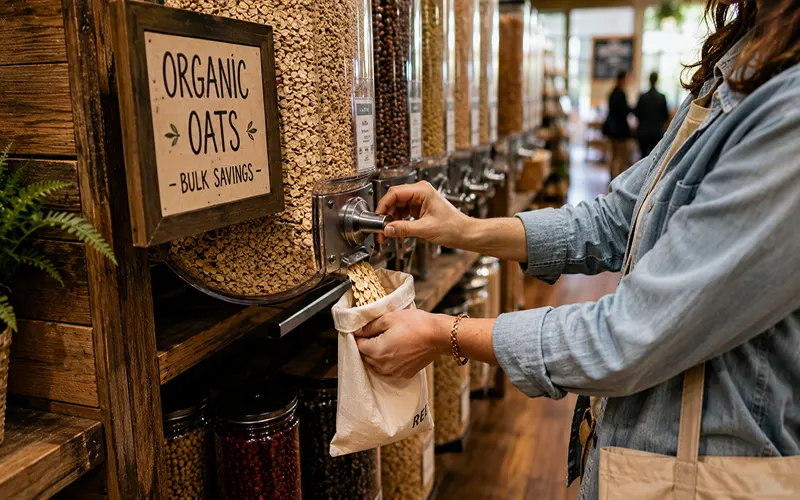
The most expensive way to buy food is in pre-packaged, single-serving portions. Shift your focus to the bulk bins. Organic rice, oats, lentils, dried beans, and nuts are significantly cheaper per pound than their packaged equivalents. These items provide high-quality protein and fiber, serving as the foundation of affordable, healthy meals.
3. Lean into Private-Label Organics
Major grocery chains have invested heavily in their own organic lines (e.g., 365, Simple Truth, O Organics). These products are held to the same USDA Organic certification standards as national brands but typically cost 20% to 30% less. Ignore the expensive national names; the label on the shelf is the only one that dictates the quality of the certification.
Sourcing Smarter
Seasonal and Local
Food that is in season is naturally cheaper because it is abundant and requires less energy to transport. Visit local farmers’ markets, but do so strategically. Many vendors offer discounts on “seconds” (slightly bruised produce that is perfectly fine for cooking) or offer bulk pricing if you visit just before closing time.
The “Cook More, Buy Less” Principle
Processed organic snacks—granola bars, pre-made crackers, and packaged cookies—are budget killers. You are paying a high premium for the organic label plus the manufacturing costs. The most affordable way to eat organic is to buy the raw ingredients and cook from scratch. A large batch of organic steel-cut oats prepared at home costs pennies compared to an organic, pre-packaged granola bar.
The Organic Budget Workflow
Use this 5-step checklist before and during your next shopping trip to keep your spending in check:
- Meal Plan Around Sales: Check your local store’s circular before you decide what to cook. If organic carrots are on sale, that’s your vegetable for the week.
- Check Unit Pricing: Never trust the “sticker price.” Look at the “price per ounce” on the shelf tag to compare the actual value between brands and package sizes.
- Cross-Reference the Lists: Ensure your shopping list prioritizes the “Dirty Dozen” for organic, while opting for conventional versions of “Clean Fifteen” items.
- Prioritize Volume Items: Use your budget to buy organic staples you use daily (like milk, eggs, or oats) and buy conventional for lower-use items.
- Audit the “Extras”: Before checking out, remove the non-essential organic processed snacks. If you haven’t budgeted for them, stick to whole ingredients.
| Category | Budget Tip |
| Produce | Buy organic for “Dirty Dozen,” conventional for “Clean Fifteen.” |
| Pantry | Buy bulk dry beans, rice, and oats; avoid pre-packaged mixes. |
| Dairy/Eggs | Use private-label brands instead of national organic names. |
| Snacks | Eliminate pre-packaged organic snacks; replace with fruit/nuts. |
Being a “smart shopper” is about long-term habits, not short-term sacrifices. Transitioning to an organic diet on a budget requires discipline, but it is entirely achievable. By prioritizing your spending where it matters most, cooking from scratch, and avoiding the “organic convenience trap,” you can improve the quality of your meals without draining your savings. Remember: even a 20% increase in your organic consumption, done consistently, is a win for your health and your wallet.