
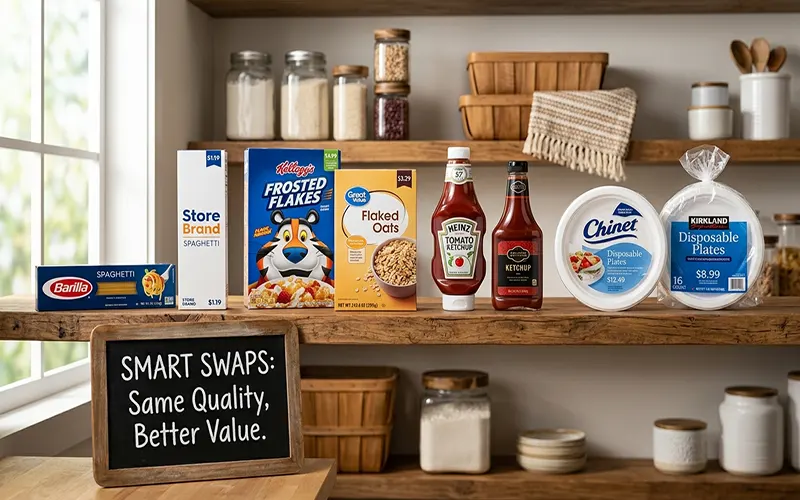
In today’s economic climate, the old stigma surrounding “generic” or store-brand products is rapidly vanishing. For decades, consumers believed that a lower price tag automatically signaled inferior quality. However, the retail landscape has shifted dramatically. Today, private-label products are often manufactured in the same facilities—sometimes even on the same production lines—as their high-priced name-brand counterparts.
For the value-conscious shopper, moving toward store brands is not a sacrifice; it is a financial upgrade. By understanding which items consistently deliver the same quality as national brands, you can significantly reduce your household expenses without lowering your standard of living.
The “Why” Behind the Savings
It is a common misconception that name-brand products cost more because they use “premium” ingredients. In reality, a significant portion of the markup on name-brand items covers massive national advertising campaigns, celebrity endorsements, and complex distribution legacy costs.
When you purchase a store brand, you are paying for the product itself, not the brand’s marketing overhead. Many major retailers now work with the same manufacturers who supply the “name brands,” simply swapping the packaging at the end of the line. When the ingredients are identical, the only difference between the two is the name on the front of the box.
Categories of “Always Buy Generic”
To maximize your budget, focus on these categories where the quality parity between store brands and name brands is nearly absolute.
1. Pantry Staples
Basic baking and cooking ingredients are the safest bets for generic swaps. Items like flour, sugar, salt, baking soda, and white rice are standardized commodities. Unless you have a very specific brand preference for a specialized baking blend, you are paying a premium for a logo on a bag of sugar that is chemically identical to the store brand sitting right next to it.
2. Canned Goods
Canned beans, corn, peas, and tomato products are excellent candidates for switching. In most cases, these items are harvested and processed at the same peak-ripeness facilities. When you compare labels, you will frequently find that the ingredient lists—often just the vegetable, water, and salt—are identical.
3. Over-the-Counter (OTC) Medications
This is perhaps the most important area to switch. By law, the FDA requires that generic medications have the same active ingredients, dosage, and strength as their brand-name counterparts. If you are buying pain relievers, allergy pills, or antacids, the generic version is medically equivalent. You are paying for the brand’s clinical marketing, not clinical superiority.
4. Paper and Household Basics
When it comes to aluminum foil, plastic wrap, trash bags, or basic cleaning supplies like bleach and vinegar, name brands rarely justify their higher prices. For aluminum foil, look for “heavy-duty” labeling if you are worried about durability. For cleaning supplies, check the percentage of active ingredients; you will often find they match perfectly.
5. Frozen Fruits and Vegetables
Frozen produce is often flash-frozen at the peak of freshness, locking in nutrients more effectively than some “fresh” produce that has traveled long distances. There is rarely a discernible quality difference between a bag of store-brand frozen broccoli and a name-brand one.
When to Stick with Name Brands
While generic products are stellar in many areas, there are instances where brand loyalty might be warranted. This usually applies to complex, proprietary recipes. For example, if you have a specific preference for a complex, high-end peanut butter formulation or a unique snack that requires a specific spice blend, the generic version may struggle to replicate the exact “crave-ability” of the original. Similarly, if your pet has a specialized diet or health concern, stick to the veterinarian-recommended food you trust.
Actionable Shopping Tips
Becoming a savvy shopper involves more than just swapping items in your cart; it requires a new approach to the store aisle.
- Read the Labels: Before buying, take five seconds to compare the ingredient list of the name brand against the store brand. If the lists match, the products are effectively the same.
- Check Unit Pricing: Stop looking at the retail price and start looking at the “price per ounce” or “price per unit” tag on the shelf. This is the only way to accurately compare value between two different package sizes.
- The “Blind Taste Test” Method: If you are skeptical about a swap (like pasta sauce or cereal), buy one of each and conduct a mini blind taste test at home. You may be surprised to find you cannot distinguish between them.
| Item Category | Potential Savings (Approx.) | Why It’s a Smart Swap |
| OTC Medications | 30% – 50% | Same active ingredients required by law. |
| Pantry Staples | 20% – 40% | Standardized commodities; no quality variance. |
| Frozen Veggies | 15% – 25% | Identical freezing processes at peak freshness. |
| Cleaning Supplies | 20% – 30% | Simple chemical formulas; high brand markup. |
Transitioning to store-brand products is an easy, low-risk way to give yourself an instant raise. By targeting pantry staples, OTC medications, and household basics, you can achieve substantial annual savings. Don’t view these swaps as a compromise; view them as a strategic reallocation of your hard-earned money toward the things that truly matter to your quality of life.


