

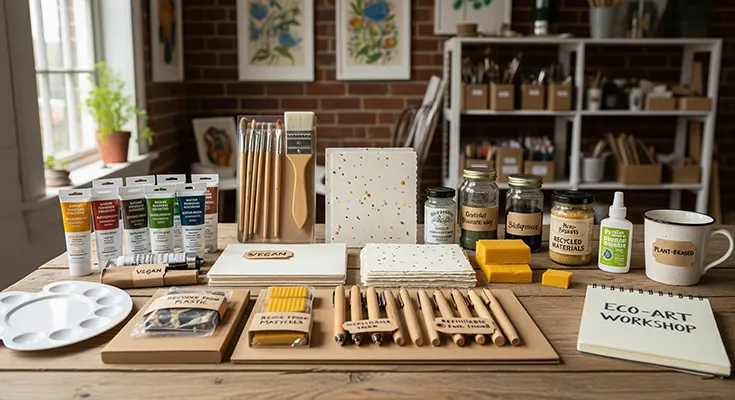
In Malang, East Java, Indonesia, and around the world, small art workshop businesses are increasingly aware of their environmental impact. Choosing eco-friendly and sustainable art supplies not only aligns with ethical values but can also attract environmentally conscious customers. This article explores key considerations and options for sourcing sustainable materials for your art workshops.
Why Choose Eco-Friendly Art Supplies?
- Environmental Responsibility: Reducing waste, minimizing the use of harmful chemicals, and supporting sustainable harvesting practices are crucial for protecting our planet.
- Health and Safety: Many traditional art supplies contain toxic chemicals that can be harmful to artists and workshop participants. Eco-friendly alternatives often use natural and non-toxic ingredients.
- Customer Appeal: Today’s consumers are increasingly environmentally aware and often prefer businesses that prioritize sustainability. Offering eco-friendly options can be a significant selling point.
- Supporting Sustainable Practices: By choosing sustainable supplies, you support businesses that are committed to environmentally responsible production and ethical sourcing.
Key Considerations When Choosing Sustainable Art Supplies:
- Materials: Look for supplies made from recycled, upcycled, natural, or sustainably harvested materials. Consider options like recycled paper, bamboo brushes, natural pigments, and reclaimed wood.
- Toxicity: Opt for non-toxic, water-based, and low-VOC (volatile organic compounds) products. Check for certifications like AP (Approved Product) or CL (Cautionary Labeling) from the Art & Creative Materials Institute (ACMI).
- Packaging: Choose products with minimal and recyclable packaging. Consider buying in bulk to reduce packaging waste.
- Durability and Longevity: Investing in high-quality, durable supplies can reduce the need for frequent replacements, ultimately minimizing waste.
- Local Sourcing (where possible): Explore local artisans and suppliers in the Malang region who offer natural and sustainable art materials. This can reduce transportation emissions and support the local economy.
Examples of Eco-Friendly and Sustainable Art Supplies:
- Paints: Look for water-based acrylics and watercolors with natural pigments. Consider brands that offer eco-friendly packaging.
- Paper: Choose recycled paper, bamboo paper, or paper made from other sustainable fibers.
- Brushes: Opt for brushes with bamboo or FSC-certified wood handles and natural or synthetic fibers that are designed for longevity.
- Drawing and Sketching Materials: Use recycled graphite pencils, charcoal made from sustainably managed forests, and non-toxic pastels and crayons.
- Sculpting Materials: Explore air-dry clay made from natural earth, reclaimed wood, and recycled metals.
- Adhesives: Choose non-toxic, water-based glues and natural adhesives.
- Varnishes and Fixatives: Select low-VOC or water-based options.
- Craft Supplies: Utilize recycled fabrics, natural fibers, and upcycled materials for various craft projects.
Integrating Sustainability into Your Workshops:
- Educate Participants: Inform your workshop attendees about the eco-friendly materials you use and the importance of sustainability.
- Reduce Waste: Implement practices like providing reusable containers for paints, encouraging participants to use all their materials, and setting up recycling bins.
- Offer Workshops Focused on Sustainability: Consider hosting workshops that specifically focus on creating art from recycled or upcycled materials.
- Partner with Local Sustainable Suppliers: Collaborate with local businesses in Malang that offer eco-friendly art supplies and promote their products.
By consciously choosing eco-friendly and sustainable art supplies, small art workshop businesses in Malang and beyond can contribute to a healthier environment, appeal to a growing market of environmentally aware customers, and inspire a more sustainable approach to art making.